

Making Room for Both
Helping Siblings Understand Each Other Without Asking Anyone to Disappear

Understanding why one child needs more support should never require another child to pretend they were not affected or ignore their own needs.
We have talked about why telling your child they are autistic or have ADHD is not one conversation.
In Before Shame Writes Their Story and What Do I Say?, we talked about how that language changes as children grow and begin asking harder questions about their own brain, body, diagnosis, and needs.
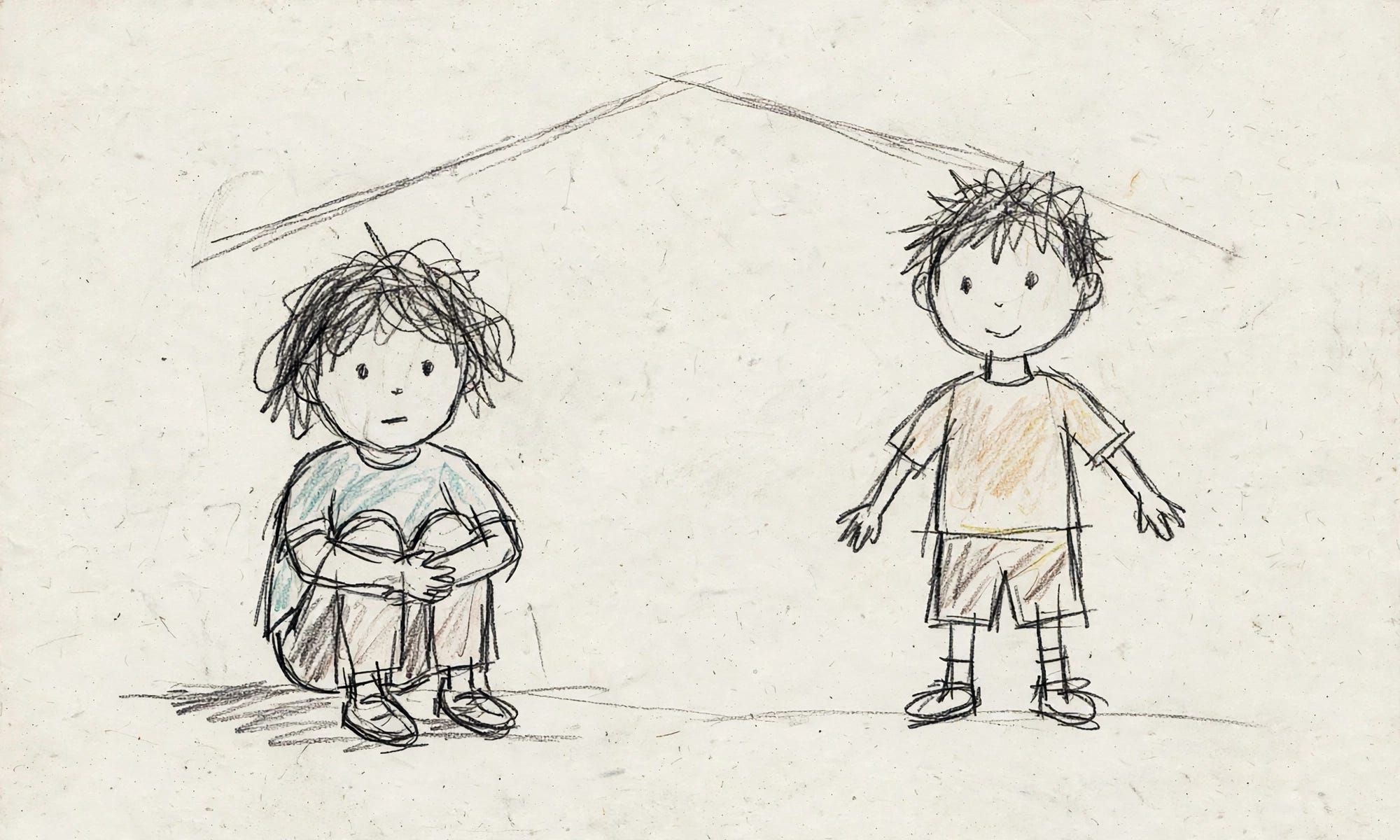
Now it is time to address the other conversation happening right beside that one.
The conversation with their siblings.
It often begins with a question that sounds simple.
“Why does he get to do that?”
“Why does she get more help?”
“Why did we all have to leave because he was upset?”
“Why do I always have to wait?”
Sometimes they never ask the questions at all.
They simply begin building their own explanation for why their sibling gets more reminders, more time, more help, more recovery, or more of you.
Children will build an explanation, especially when we do not give them one.
That is why talking about neurodivergence in your family cannot only be about helping one child understand themselves.
Siblings need language for what they notice, what affects them, and what they need too.
Their sibling’s needs should not become the only lens through which they understand themselves or their place in the family.
And they still need help understanding what is happening.
Your Kids Already Notice
Kids notice when their sibling needs the plan to stay the same, cannot tolerate the noise, receives more reminders, or needs another chance after becoming overwhelmed.
They also notice when they are the ones asked to wait, understand, be flexible, or “know better.”
They notice when they are praised for being easy, or when their needs can probably wait because their sibling’s need is louder.
When we do not help children understand what they are seeing, they may decide their sibling gets whatever they want and that you love their sibling more.
They may learn through experience that they have to be the easy one and that their own needs are not serious enough to matter.
Protecting both children begins with telling more of the truth.
We can help them understand what may be happening for their sibling.
“You have probably noticed that loud sounds can hurt your brother’s body.”
“Changing the plan can make your sister feel like everything suddenly became uncertain.”
“Sometimes your sibling interrupts because the thought feels urgent, or because they are afraid they will lose it.”
We do not stop there.
The sibling also needs help understanding what is happening inside them.
“You were expecting one thing, and then the plan changed again. That was disappointing for you.”
“You seem angry, but I wonder whether you are also tired of having to wait.”
“You love your sister, and sometimes being around her when she is overwhelmed is too much for your body.”
“You understand why your brother needed to leave and still wish you had been able to stay.”
Without shame or blame, we teach both children that everyone in the family has a nervous system, limits, feelings, and needs.
Understanding why something happened does not mean it did not affect them.
And understanding their sibling should never require them to disappear.
This is a longer article because siblings need more than a simple explanation of autism or ADHD.
They need language for their anger, disappointment, boundaries, care, and place within the family.
Below the paywall, I talk about what these conversations can sound like, why explanation is not the same as excusing, how quieter children can become invisible, and what repair needs to include when one child’s distress affects another.
Subscribe to keep reading and support practical, neurodiversity-affirming writing for families living this in real time.
